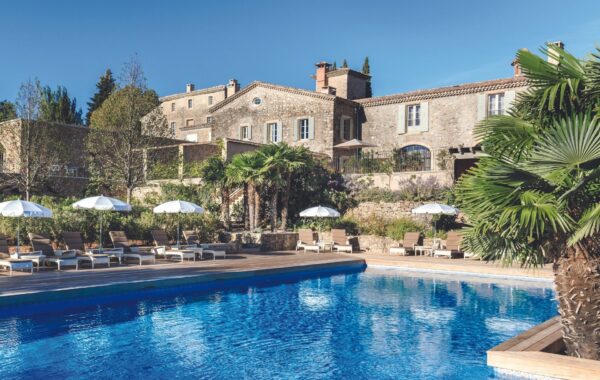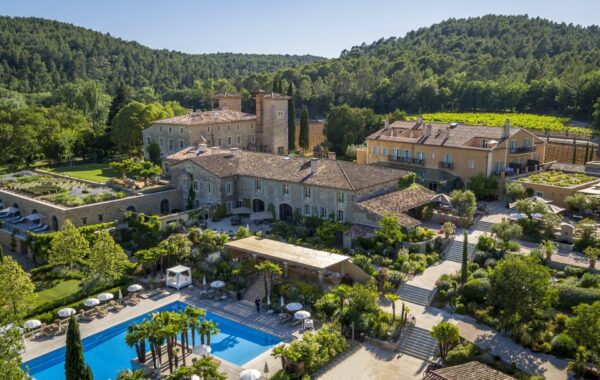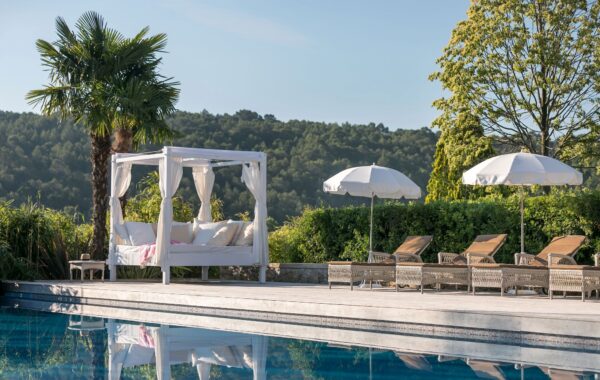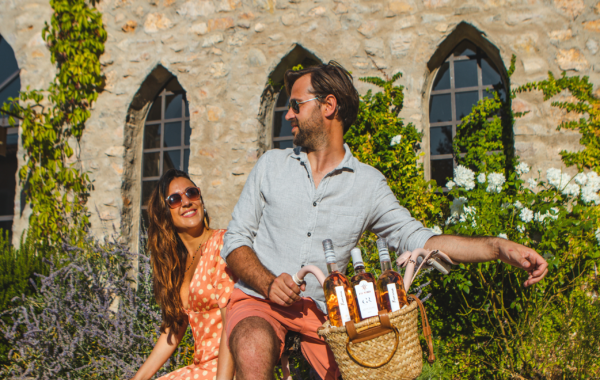

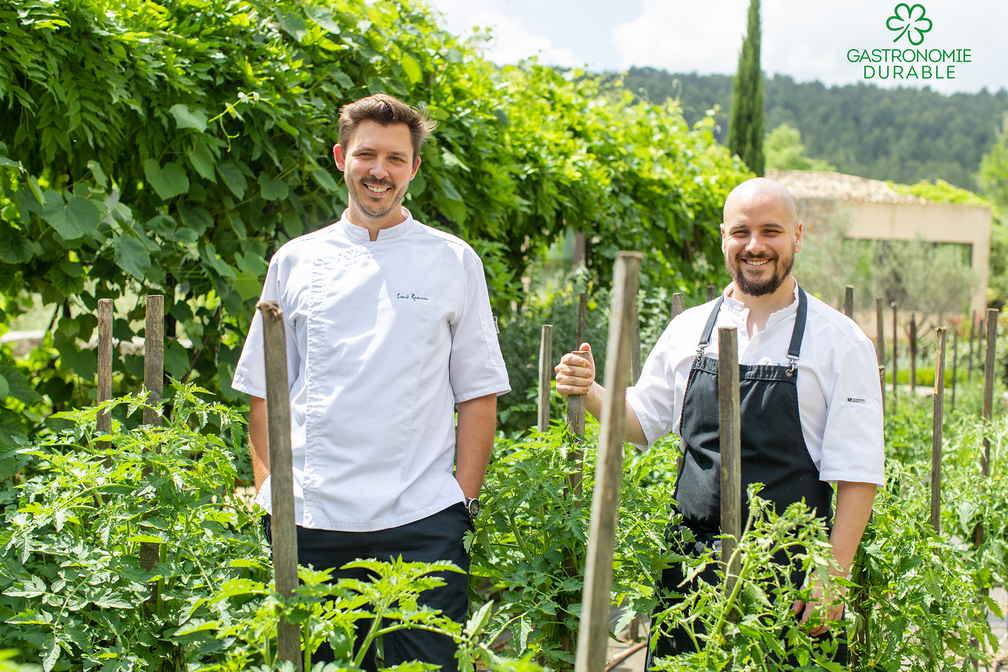
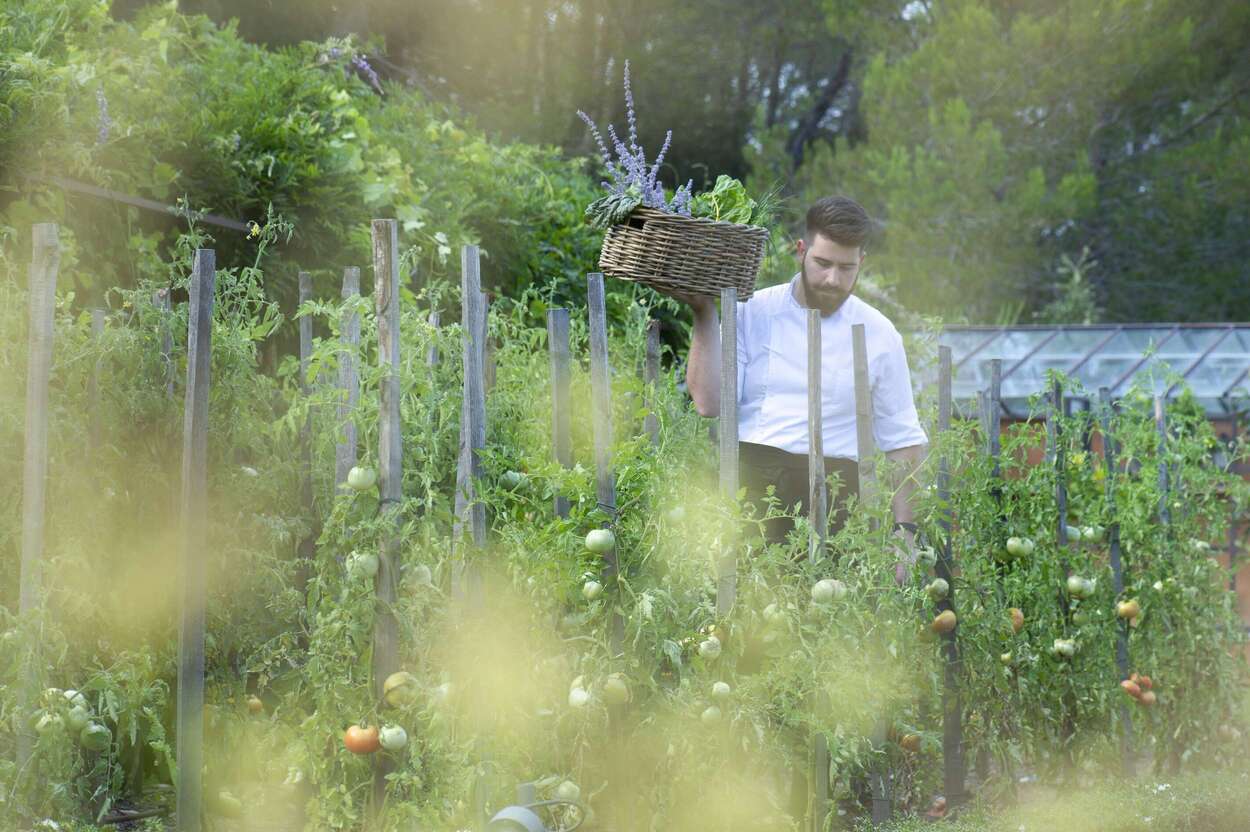
At Château de Berne, in Flayosc in the Var, three vegetable gardens cover more than 3,000 m² within a vineyard estate spanning over 500 hectares. Vegetables, berries, fruit, herbs and flowers are grown there using sustainable farming methods, and then served in the estate’s three restaurants. It is the shortest supply chain a five-star hotel can organise between the plot of land and the plate.
Three vegetable gardens, 3,000 m²: what grows at the Château de Berne
You don’t just stumble upon the vegetable gardens by chance. They appear round the edge of a lavender patch, set back from the buildings, between the rows of vines and the forest. Three separate areas, totalling over 3,000 m², where vegetables, berries, fruit, herbs and flowers are grown in accordance with sustainable farming practices.
This diversity is a choice. A restaurant’s vegetable garden does not operate like a commercial market garden: it does not aim for high yields across three crops, but rather seeks a wide variety of produce, enabling the menu to be refreshed throughout the year.
The vineyard surrounding these vegetable gardens follows a completely different schedule — just one harvest a year — but is subject to the same agronomic standards. One hundred and fifty hectares were certified as organic in February 2021, as part of the sustainable initiatives in the sector. The vineyards are covered with grass, which provides organic matter, promotes soil life and retains water. Treatments are limited to products authorised for organic farming, with no insecticides, and are supplemented with herbal infusions. The estate also carries out the «underwear test»: pairs of underpants are buried and then dug up after several months, and their state of decomposition provides a direct measure of the soil’s biological activity — the more decomposed they are, the more active the soil.
From the vegetable patch to the kitchen: the shortest journey in Provence
The estate comprises three tables. Le Jardin de Berne, a Michelin-starred fine-dining restaurant, where chefs Louis Rameau and Eric Raynal strive to bring out the unique qualities of each ingredient. L’Olivier de Berne, open in the summer, specialises in southern French cuisine, with its large terrace and dishes designed for sharing. And Le Bistrot, open all year round, with a focus on local produce.
All three draw on the same vegetable gardens. Produce harvested in the morning can be served that evening, without the need for transport, interim storage or commercial intermediaries. For the rest of its supplies, the estate follows a ‘locavore’ approach and works exclusively with local producers.
Getting your hands dirty in the vegetable patch: Thursday’s cookery class
It’s the best way to get to know this route, rather than just reading about it on a map. The estate’s cookery school offers a cookery class every Thursday at 10 am, for a maximum of ten people, at €170 per person. The menu is not set in advance: it depends on the chef’s inspiration and what has been harvested from the vegetable garden that very day. The class concludes with a tasting of the dishes prepared, accompanied by the estate’s wines.
For longer stays, 100 km of hiking trails wind their way through farmland, woodland and vineyards, and run close to the crops. The rooms and villas at the 5-star hotel all look out onto this same landscape.
Frequently Asked Questions
How many vegetable gardens are there at the Château de Berne?
Three vegetable gardens, covering a total area of over 3,000 m², cultivated using sustainable farming methods.
Is the estate certified organic?
One hundred and fifty hectares of vineyards were certified as organic in February 2021. The estate has also held Bee Friendly certification since 2022.
Can we see the vegetable garden during our stay?
The vegetable gardens are situated on the estate, which visitors are free to explore on foot. The Thursday cookery class is the activity that brings participants into the closest direct contact with the produce harvested.
What is grown in vegetable gardens?
Vegetables, berries, fruit, herbs and flowers.
Which restaurants use produce from the vegetable garden?
The estate’s three restaurants: Le Jardin de Berne, a Michelin-starred gourmet restaurant; L’Olivier de Berne, open in the summer; and Le Bistrot, open all year round.
Where is Berne Castle?
Chemin des Imberts, 83780 Flayosc, in the Var, between Lorgues and Flayosc.